
Vendor Compliance Chargebacks: How a Miami 3PL Helps Retail Suppliers Avoid Them (2026)
A single mislabeled pallet or a missed appointment window can turn into a chargeback worth hundreds of dollars per violation once a big-box retailer’s routing guide is involved. For Miami-based suppliers shipping into major retail distribution networks, the fastest way to cut chargebacks is not better luck, it is a 3PL that builds routing-guide compliance into receiving, labeling, and outbound scheduling by default.
Where Vendor Compliance Chargebacks Actually Come From
Most chargebacks trace back to a handful of repeat offenders: late shipments against a fixed delivery window, incorrect or missing GS1 barcodes and ASNs (advance ship notices), non-compliant pallet configurations, and appointment scheduling failures at the receiving dock. Each retailer publishes its own routing guide, and the specifics, such as pallet height limits, floor-load vs. palletized requirements, and carton labeling placement, vary enough between retailers that manual compliance is where errors creep in.
Where a 3PL Fits Into the Chargeback Problem
Receiving and Relabeling
A 3PL warehouse that already handles GS1-128 labeling and carton marking as a standard receiving step catches mislabeled inventory before it ever reaches a retailer’s dock, rather than after a chargeback notice arrives.
Cross-Dock Timing Discipline
Retail routing guides are built around fixed delivery appointment windows, often as narrow as a single day or a few hours. A cross-dock operation that tracks appointment dates as part of its outbound scheduling, rather than treating them as a shipping-label afterthought, is what keeps on-time percentages above the threshold most retailers use to trigger penalties.
ASN Accuracy
An advance ship notice that does not match the actual carton count, weight, or contents on arrival is one of the most commonly penalized routing-guide violations. This is a data-accuracy problem as much as a shipping problem, and it needs to be caught at the warehouse management system level before the truck leaves the dock.
Building a Chargeback Prevention Checklist With Your 3PL
Ask your 3PL to walk through, retailer by retailer, how they handle: appointment scheduling and confirmation, GS1 label placement and verification, ASN generation and accuracy checks, and pallet configuration rules (floor-loaded vs. palletized, pallet height and weight limits). If any of these four areas gets a vague answer, that is the retailer relationship most likely to keep generating chargebacks.
When Chargebacks Are Worth Disputing
Not every chargeback is valid. Appointment-related penalties in particular are worth disputing when the delay was caused by the retailer’s own dock congestion or a late appointment confirmation rather than a late-arriving truck. Keeping dock-in and dock-out timestamps from your 3PL gives you the documentation needed to dispute chargebacks that were not actually your fault.
The Real Cost of Chargebacks Beyond the Fee Itself
The dollar amount of a single chargeback is rarely the biggest cost. Repeated violations put a vendor scorecard at risk, and a low enough score can affect purchase order allocation or trigger a formal compliance review from the retailer’s vendor relations team. Treating chargebacks as an operations metric to drive toward zero, not just a cost of doing business to absorb, is what separates suppliers who keep growing a retail account from those who eventually lose it.
Getting Your 3PL and Retail Accounts on the Same Page
Share your retailers’ current routing guides directly with your 3PL’s warehouse and transportation teams rather than relying on a general compliance summary. Routing guides are updated periodically, sometimes with little advance notice, and a 3PL working from an outdated version is one of the most avoidable sources of new chargebacks.
Frequently asked questions
What is the most common cause of retail vendor compliance chargebacks?
Missed delivery appointment windows and mislabeled cartons or pallets are the two most common causes of vendor compliance chargebacks across major retail routing guides.
Can a 3PL help dispute an existing chargeback?
Yes, if the 3PL kept accurate dock-in, dock-out, and ASN records for the shipment in question, that documentation is usually what is needed to successfully dispute a chargeback that was not the supplier’s fault.
Do all retailers use the same routing guide requirements?
No. Each retailer publishes its own routing guide with its own labeling, ASN, and appointment rules, which is why suppliers shipping to multiple retail accounts benefit from a 3PL that tracks each retailer’s requirements separately.
Fighting recurring chargebacks? Talk to Go Freight about routing-guide compliant warehousing or call (786) 445-0150.
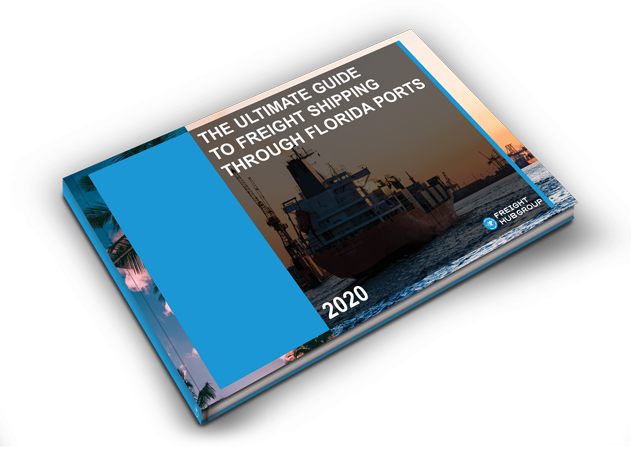
THE ULTIMATE GUIDE TO FREIGHT SHIPPING THROUGH FLORIDA PORTS
When it comes to ocean freight shipping in Florida, there is a lot to know to ensure you follow the appropriate steps when shipping into and out of Florida Ports.
Just enter in your email address and receive your FREE E-Book in minutes!