
Freight Class and NMFC Codes: How Miami LTL Shippers Avoid Reclassification Fees in 2026
Reclassification fees are the surprise charges LTL carriers add when the freight class you booked does not match what they inspect on the dock. In 2026, with the NMFC system moving toward a density-based framework, Miami LTL shippers who guess at freight class are getting hit with reweigh and reclass adjustments that quietly inflate every invoice. The fix is understanding how freight class is set and documenting your shipments accurately from the start. Go Freight’s South Florida delivery and LTL team helps shippers class freight correctly before it ever leaves the dock.
What is freight class?
Freight class is a standardized number, ranging from 50 to 500, that carriers use to price less-than-truckload shipments. Lower classes are dense, durable, and easy to handle, so they cost less per pound; higher classes are light, bulky, fragile, or awkward, so they cost more. The class is assigned through the National Motor Freight Classification (NMFC) system, which historically considered four factors: density, stowability, handling, and liability. If you have never worked with LTL before, our guide to what LTL freight means is a good starting point.
The 2026 shift toward density
The NMFC system is being simplified so that many commodities are classified primarily by density — pounds per cubic foot — rather than a fixed class per commodity code. For shippers, this makes accurate dimensions and weight more important than ever. If you understate density, the carrier’s dimensioner catches it, reclasses the shipment upward, and bills the difference plus a fee. The reverse rarely results in a refund. Knowing your true density before booking is now the single most valuable habit an LTL shipper can build.
How to calculate density
Measure the shipment including packaging and pallet at its longest, widest, and tallest points. Multiply length by width by height in inches, divide by 1,728 to get cubic feet, then divide the total weight by that cubic-foot figure. That pounds-per-cubic-foot number drives the class under a density-based standard. Do this for every SKU configuration you ship regularly and keep a reference table at the dock.
Why Miami LTL shippers are especially exposed
South Florida’s LTL lanes are dense with mixed international cargo, re-exports, and consolidated freight bound for Latin America and the Caribbean. That variety means shippers handle many commodity types, each with its own class, and a single mislabeled pallet can trigger a reclass across a whole manifest. Pairing accurate classification with the right service — whether that is standard LTL, volume LTL, or a dedicated move — keeps costs predictable. Our comparison of FTL versus LTL and our explainer on volume LTL help you match the shipment to the mode.
Five ways to avoid reclassification fees
First, weigh and measure every shipment rather than reusing old numbers. Second, keep a density and class reference for your recurring SKUs. Third, describe the commodity accurately on the bill of lading — vague descriptions invite the highest default class. Fourth, palletize and shrink-wrap so dimensions are consistent and the carrier cannot claim excess handling. Fifth, work with a logistics partner that audits your BOLs before pickup, because catching an error on your dock costs nothing while catching it on the carrier’s dock costs a fee.
Frequently asked questions
What triggers a reclassification fee?
A mismatch between the class you booked and what the carrier measures or weighs on inspection — usually understated density, wrong dimensions, or an inaccurate commodity description.
Is freight class going away in 2026?
No. The NMFC system is being simplified toward density-based classification for many items, but freight class itself remains the basis for LTL pricing.
Can a 3PL class my freight for me?
Yes. An experienced LTL provider will calculate density, assign the correct class, and audit your bill of lading before pickup to prevent reclass adjustments.
What to keep on file for a clean audit
Carriers and their inspection technology now capture certified dimensions and weights at multiple points along a lane, so disputes come down to documentation. Keep three things on file for every recurring shipment: a dated photo of the palletized freight, the certified scale weight, and the density calculation that supports the class you booked. When a carrier issues a reclass, that evidence lets you dispute the adjustment instead of paying it by default. Shippers who maintain this record routinely recover a meaningful share of reclass charges, while those who cannot document their freight almost always lose the dispute. Build the habit into your shipping routine and it pays for itself within a single billing cycle.
Class your freight right the first time
Go Freight helps South Florida shippers calculate density, class LTL freight accurately, and audit documentation before pickup so reclass fees stay off the invoice. Call (786) 445-0150 or email rates@go-freight.ai for an LTL quote built on accurate classification.
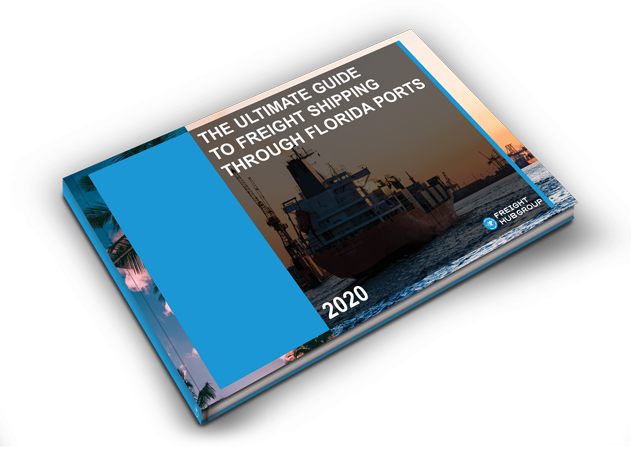
THE ULTIMATE GUIDE TO FREIGHT SHIPPING THROUGH FLORIDA PORTS
When it comes to ocean freight shipping in Florida, there is a lot to know to ensure you follow the appropriate steps when shipping into and out of Florida Ports.
Just enter in your email address and receive your FREE E-Book in minutes!