
How to ship freight from Miami to Honduras in 2026: Puerto Cortes transit times, LCL vs FCL, CAFTA-DR duty rules, documents and cost drivers.
Freight Shipping From Miami to Honduras: A 2026 Guide
Honduras is one of the steadiest lanes out of South Florida. Maquila operations around San Pedro Sula pull in fabric, trim and machinery; grocery and hardware distributors in Tegucigalpa buy consolidated US goods; and a growing medical-device sector moves temperature-sensitive cargo both directions. Almost all of it touches Miami first.
This guide covers what actually determines your cost and transit time on the Miami-Honduras lane, and where shipments most often go sideways.
Which port should your cargo move through?
Honduras has two commercially relevant seaports, and picking the wrong one adds days of inland trucking.
Puerto Cortés (Caribbean coast)
Puerto Cortés handles the overwhelming majority of Honduran container volume. It sits about 60 km from San Pedro Sula, the industrial center, and roughly 240 km from Tegucigalpa. It is also a Container Security Initiative port, which matters if you are a C-TPAT participant and want predictable screening.
If your consignee is anywhere in the northern industrial corridor — San Pedro Sula, Choloma, Villanueva, La Lima — Puerto Cortés is almost always correct.
Puerto Castilla (Trujillo)
Puerto Castilla is smaller, with thinner sailing frequency and less inland trucking capacity. It makes sense for project cargo, agricultural exports, or consignees on the eastern coast. For general merchandise it usually adds cost.
Air via San Pedro Sula (SAP) or Tegucigalpa (TGU)
Air freight out of Miami International is the right answer for spare parts, samples, AOG, clinical materials and anything where a two-week ocean transit destroys the value of the shipment. Expect a substantial premium per kilo, but door-to-door in two to four business days is realistic.
Transit times you can plan around
Direct services from PortMiami and Port Everglades to Puerto Cortés generally run three to six days on the water. That is the sailing leg only. Build your real schedule like this:
- Cargo ready to CFS or terminal receipt: 1-2 days
- Consolidation and export documentation (LCL): 2-4 days
- Cut-off to sailing: 1-3 days
- Ocean transit: 3-6 days
- Discharge, customs clearance and inland delivery: 2-5 days
A realistic door-to-door LCL window is 10 to 16 days. Full container loads compress that meaningfully because you skip the deconsolidation step on both ends.
If you are staging cargo in South Florida before an export sailing, our 3PL warehousing in Miami can hold and consolidate it so you hit the cut-off instead of chasing it.
LCL vs FCL on this lane
The Honduras lane has good groupage service, so LCL is genuinely competitive for smaller volumes.
Choose LCL when you are shipping under roughly 12-15 cubic meters, your consignee cannot absorb a full container of inventory, or you are testing a new distributor relationship.
Choose FCL when you are consistently above that volume, your cargo is fragile or high-value (fewer handling touches), or you need speed and schedule certainty. A 40′ high cube also reduces your per-unit cost dramatically once you can genuinely fill it.
One caution specific to consolidation: LCL cargo is handled more times, and Central American deconsolidation facilities are not always gentle. Pallets should be stretch-wrapped, corner-boarded and banded. If your packaging is marginal, the savings evaporate into damage claims.
CAFTA-DR and duty treatment
Honduras is a CAFTA-DR party, which means qualifying US-origin goods can enter duty-free. This is the single largest cost lever on the lane and it is routinely left on the table.
To claim preference, your goods must meet the agreement’s rule of origin for their tariff classification — not simply be shipped from the United States. Goods that were merely transshipped through Miami do not qualify. The importer claims the preference, supported by a certification of origin that can be issued by the importer, exporter or producer. There is no prescribed government form, but the certification must contain the required data elements and you must be able to support it if Honduran customs asks.
Textile and apparel rules of origin are stricter than most categories and have their own yarn-forward requirements. If that is your product, get classification advice before you quote a landed cost to your buyer.
Documents Honduran customs will expect
- Commercial invoice, in Spanish or with a Spanish translation, showing full descriptions, quantities, unit values and Incoterm
- Packing list with marks, numbers, weights and dimensions
- Bill of lading or air waybill
- CAFTA-DR certification of origin, where preference is claimed
- Product-specific permits: sanitary registration for food, beverages, cosmetics and pharmaceuticals; agricultural permits for plant and animal products
Vague invoice descriptions are the number one cause of delay. “Machine parts” or “assorted goods” will get your shipment held. Describe what the item actually is, what it is made of, and what it does.
What drives your cost
| Cost driver | Why it matters |
|---|---|
| Chargeable volume or weight | LCL bills on whichever is greater; dense cargo pays on weight |
| Origin drayage and CFS handling | Getting cargo from your Miami door into the consolidation warehouse |
| Ocean freight and surcharges | Base rate plus bunker, peak season and terminal handling |
| Destination charges | Port fees, deconsolidation, storage if clearance is slow |
| Duties and taxes | Honduran sales tax applies even when CAFTA-DR zeroes the duty |
| Inland delivery | San Pedro Sula is cheap; Tegucigalpa and remote departments are not |
If you are moving containers rather than pallets, the container drayage leg between your facility and PortMiami or Port Everglades is where schedule slippage usually starts — an unreturned chassis or a missed terminal appointment costs more than the drayage itself.
Practical ways to reduce landed cost
Consolidate your suppliers before you export. If you are buying from four vendors around South Florida, having them all deliver to one Miami warehouse and shipping a single consolidated container is dramatically cheaper than four separate LCL bookings.
Get your HS classification right the first time. Reclassification at destination costs you duty, storage and credibility with your consignee.
Book against a schedule, not a wish. Sailings to Puerto Cortés are frequent but cut-offs are firm. Missing one adds a week.
Ask about total landed cost, not ocean freight. The freight rate is often less than half of what your buyer actually pays.
Frequently asked questions
How long does freight take from Miami to Honduras?
Ocean transit from PortMiami or Port Everglades to Puerto Cortés typically runs three to six days. Door to door, including consolidation, export documentation, customs clearance and inland delivery, a realistic window is 10 to 16 days for LCL and closer to 8 to 12 days for a full container. Air freight to San Pedro Sula is usually two to four business days.
Do I pay duty on US goods shipped to Honduras?
Not necessarily. Honduras is a CAFTA-DR party, so US-origin goods that satisfy the agreement’s rule of origin for their tariff classification can enter duty-free when the importer claims preference with a valid certification of origin. Goods that were only transshipped through the United States do not qualify, and Honduran sales tax still applies even when the duty is zero.
Is LCL or a full container cheaper for shipping to Honduras?
LCL is generally cheaper below roughly 12 to 15 cubic meters. Above that, a 20′ or 40′ container usually wins on cost per unit and reduces handling damage because the box is not opened at a deconsolidation warehouse. If you are shipping regularly, running the math on both at your actual volume is worth doing once a quarter.
Shipping to Honduras from South Florida?
Go Freight is an asset-based 3PL in Miami handling consolidation, export documentation, drayage and warehousing for Central American lanes. Request a freight quote and we will price the whole move, not just the ocean leg.
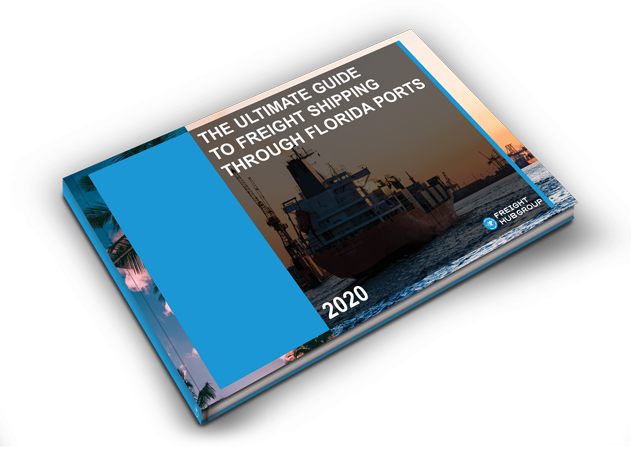
THE ULTIMATE GUIDE TO FREIGHT SHIPPING THROUGH FLORIDA PORTS
When it comes to ocean freight shipping in Florida, there is a lot to know to ensure you follow the appropriate steps when shipping into and out of Florida Ports.
Just enter in your email address and receive your FREE E-Book in minutes!