
Hurricane Relief Cargo: Shipping Emergency Supplies from Miami in 2026
When a hurricane hits the Caribbean or Gulf, relief cargo moves out of Miami faster than anywhere else in the U.S. — if it is packed, documented, and consolidated correctly. In 2026, NGOs and businesses shipping emergency supplies choose between airlift for the first 72 hours and ocean freight for volume, with Miami warehouses acting as the staging point. This guide covers how to move generators, water, food, tarps, and medical supplies without losing days to paperwork.
Air vs ocean for relief shipments
First 72 hours: air
Charters and scheduled freighters out of MIA carry the urgent tier — medicines, water filtration, comms gear. Space is scarce and expensive immediately after landfall, so consolidating pallets at a staging warehouse and tendering flight-ready cargo (screened, labeled, manifested) is what gets uplift priority.
Volume phase: ocean
Within days, ocean services resume and carry the bulk: roofing, lumber, generators, food staples. LCL consolidations sail weekly to most islands — see how Miami groupage works — while full containers move directly to the affected port as it reopens.
Paperwork that keeps relief cargo moving
Even donated goods need a commercial invoice (declared value for customs), packing list, and consignee who can clear the shipment — usually a registered NGO, church network, or government agency at destination. Many islands fast-track relief entries after a declared disaster, but only for consignees on their approved lists; confirm before sailing. Exports over $2,500 per Schedule B line still require an EEI filing, and a licensed freight forwarder handles it as your agent.
Packing and staging in Miami
Palletize uniformly, shrink-wrap, and label every pallet with consignee, contents, and weight; mixed loose cartons are what stalls relief containers at destination. Stage cargo at a cross-dock near the port so donations from multiple collection points consolidate into full containers. Generators and fuel-powered equipment must ship drained and DG-declared — our generator freight guide covers the rules. For South Florida’s own storm prep, review the 2026 drayage contingency guide.
Frequently asked questions
How fast can relief cargo ship from Miami after a hurricane?
Air shipments can move within 24–72 hours of airport reopening; ocean services typically resume within about a week, with transit of 2–7 days to most Caribbean ports depending on the island and port condition.
Do donated goods still go through customs?
Yes. Donations need a commercial invoice with declared values, a packing list, and a consignee authorized to clear relief goods at destination. Disaster fast-track programs apply only to approved consignees, so coordinate with the receiving NGO or agency first.
Can I ship a generator in a relief container?
Yes, if it is new in box or fully drained of fuel and declared correctly; used generators with fuel residue are regulated as dangerous goods and need DG paperwork and placarding.
Stage your relief shipment now
Go Freight stages, consolidates, and ships relief cargo from 3300 NW 110th St., Miami, FL 33167. Request a relief freight quote or call (786) 445-0150 — we answer during activations.
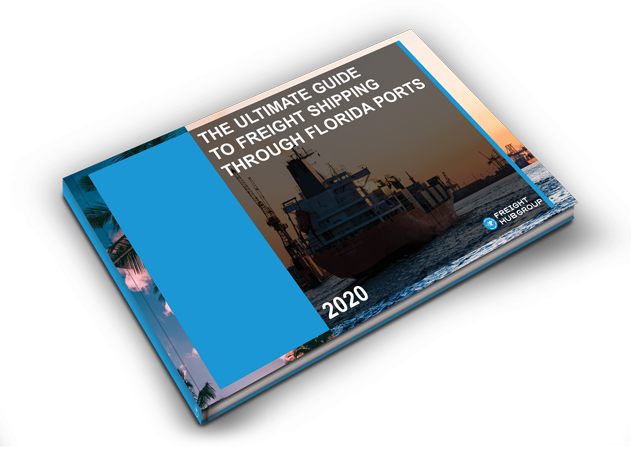
THE ULTIMATE GUIDE TO FREIGHT SHIPPING THROUGH FLORIDA PORTS
When it comes to ocean freight shipping in Florida, there is a lot to know to ensure you follow the appropriate steps when shipping into and out of Florida Ports.
Just enter in your email address and receive your FREE E-Book in minutes!